
Heavenly Muses, give us skill to sing,
Who softly dance around the deep blue spring
And altar of Zeus, Cronos’ mighty son,
Who hold the sacred mount of Helicon.
When these have bathed themselves in Permessus,
Or in the Horses’ Spring or Olmeius,
They make their lovely dances up on high,
On Helicon, with feet that spin and fly
In lovely dances, and walk about at night,
Clothed in dark mist; their voices then take flight,
And with their song they praise the one who bears
The aegis, Zeus, and Hera, she who wears
The golden sandals; Athena the wise,
The aegis holder, with gray, shining eyes;
Phoebus Apollo; Artemis who takes
Delight in arrows; Poseidon who shakes
The earth, and holds it with his mighty arms;
Themis, the revered, and the one whose charms
Are legend, Aphrodite, she whose eyes
Are ever flirting, filling all with sighs;
And Hebe, she who has the crown of gold;
Dione, Leto, Iapetus, and old
And crafty Kronos, Eos, and the Sun,
Helios, bright Selene, Earth and Ocean,
And Night, the dark one; all the holy race
Of deathless gods, all beautiful of face.
On a certain day, they taught Hesiod
Of songs, most lovely, beautiful, and good,
While he was keeping of his lambs account,
Under Helicon, the great, holy mount.
First of all, the Goddesses said to me,
The Muses of Olympus, they who be
The daughters of the aegis-wielding Zeus:
“Rustic shepherds, deserving of abuse,
Full of shame, you’re nothing more than bellies;
We know how to speak many lies that please,
Convincing frauds, but when we wish, we still
Can speak the truth with a most cunning skill.
So spake the clear voiced daughters of the god,
Great Zeus; they gave to me a blooming rod,
A staff of laurel, marvelous to see;
A voice divine did they breathe into me,
To sing of what will be, and of what’s past,
Of all the gods that cannot be surpassed,
Eternal, blessed, holy, always good:
But first and last the Muses said I should
Extol them, so of them I first did speak.
Why talk of oak and stone? Is this what I seek?
Now, let us with the Muses make our start,
Who with their songs cheer father Zeus’s heart
High in Olympus, telling how things are,
And knowing what is near and what is far;
They speak of what shall be and what is past:
In harmony they cannot be surpassed.
Untiring, from their lips flow sounds so sweet,
And all the house of Zeus is most replete
With joy at their pure voices when they sing,
And all Olympus’ snowy peaks do ring,
And all the houses of the gods resound
When their sweet music echoes all around.
With their undying voices do they praise
The holy race of gods. In former days,
When the children of Heaven and of Earth
By their great parents were brought to the birth,
And they produced the gods, their noble seed,
Who give as gifts all that is good indeed.
When they begin and end the Muses sing
Of Zeus, from whom the gods and men both spring,
And they declare his excellence and might,
And supremacy in power and right.
The race of men and giants they proclaim,
Who by heroic acts have earned their fame;
The Muses cheer the heart of Zeus, who bears
The aegis, king of Olympus’ affairs.
And in Pieria did Memory,
Who rules o’er Eleuther’s hills joyfully,
In union with the son of Kronos bear
Forgetting of troubles and rest from care.
Nine nights Zeus lay with her away from all
The gods who dwell within Olympus’ hall.
And after that a year had passed away,
The months had waned, gone were many a day
The seasons turning round, she bare him nine
Daughters, one in mind, exceedingly fine,
Whose hearts are set on song and ever free
From sorrow, living in felicity,
Near to the top of Mount Olympus where
The gods dwell joyfully and free from care.
There are their dance halls and their lovely home,
Near where the Graces and Himerus roam.
From out their lips their lovely voices swell,
And of the laws of everything they tell.
Their voices also they duly employ
To sing the deeds of all the gods with joy.
Then to Olympus did they go; the sound
Of music rose up from the holy ground
Beneath their feet; their chanting filled the air
And echoed sweetly: their voices were fair.
In heaven Zeus was reigning; by his might
He’d overthrown his father in a fight.
The shining thunderbolt was in his hands,
The rights of all the deathless he commands;
He gave to each whatever thing was just,
Ruling all, supreme, obey him they must.
Such things in song did all the Muses speak
Upon Olympus’ snowy mountain peak,
The nine by Zeus begotten – Thaleia,
Cleio, Erato, Polyhymnia,
Melpomene, Urania, Euterpe,
With Terpsichore and Calliope,
Who is the head of all of them, for care
Of princes at their births must this daughter bear;
Upon his tongue a nectar do they pour:
With gracious words he’s blest forever more.
The people bring their suits, and bend their ear;
True judgements from his lips they gladly hear.
Contentions can he settle, for his mind
Seeks out the truth and does true wisdom find.
For kings with wisdom in their hearts do reign
To bring assemblies, erring, back again
To truth and right, persuading by their speech,
And all their subjects gently do they teach.
The people greet him as a god; he goes
Through the assembly. He who sees him knows
He’s worthy to be honoured: from above
The Muses give this gift to men with love.
The Muses and far-shooting Phoebus give
To men all those upon the earth who live
As singers and musicians, but the king,
He comes from none but Zeus. The Muses bring
Great joy to whom they love: sweet speeches spring
From out his lips. For though a man should grieve,
And sorrow, and his burdened soul should heave
With dread because his heart is sore distressed,
Yet when a poet sings his soul will rest.
The servant of the Muses tells the deeds
Of men of old and gods, and so he leads
The sorrowful away from misery:
The Muses’ gift frees him from drudgery.
Hail, Zeus’s children! Grant us goodly song,
And praise the sacred race of all the strong,
Eternal gods who had their hallowed birth
From starry Heaven and from mother Earth
And darkest Night, and those the salty Sea
Did raise, how gods and Earth both came to be,
How boundless sea which swells with rage was born,
And rivers, and the stars that do adorn
The sky, and heaven, who is vast and wide,
And the gods they birthed, how they did divide
Their wealth. Their gifts are only good; declare
How their honours amongst them they did share,
How first they took Olympus, make it known,
And which of them came first, let it be shown.
You Muses, who in high Olympus sing,
Tell to me these things from the beginning.
Chaos was first of all that came to be,
But next was Earth, whose foundations surely
Hold up the snowy peaks of Olympus
That the gods possess, and dark Tartarus
Within the Earth’s vast deep, and Love, who reigns
As fairest of the gods, author of pains
That weaken limbs and overthrow the mind;
Counsels of gods and men does Love unwind.
From Chaos came forth Erebus and Night,
Who is all dark and hidden to the sight;
Her love for Erebus she did display,
And brought forth children, Aether and the Day.
And starry Heaven did the Earth first bare,
Her equal, for to cover her with care,
To be the dwelling place eternally
Of all the gods. From her there came to be
The Hills, where Nymphs abide among the dales,
And Sea, whose raging swell the coast assails;
Without a loving union came the Sea,
Whose fruitless depths, they heave up endlessly.
But after this with Heaven did she lay,
And they brought forth their children by their play.
Deep churning Oceanus, Koios,
Hyperion, Kreius, and Iapetus,
Theia, Rhea, Themis, and Mnemosyne,
Phoebe, golden crowned, Tethys the divine,
And Kronos, born the last, the cunning one,
Most terrible of all was this last son.
He hated Heaven, his own mighty sire,
And all his heart was filled with deadly ire.
She bore the Cyclopes, spirits impudent,
Brontes, Steropes, and the arrogant
Arges, these are who gave the lightning rod
And the thunder to Zeus, the mighty god;
In every way like gods these had been made,
Except that with one eye they were arrayed.
The Orb-eyed were they called, and this is why,
That in their foreheads there was set one eye.
These three were full of cunning skill and might,
And vigour in the works they brought to light.
And after this there were three children more
That Earth from union with great Heaven bore,
Kottos, Gyes, Briareus were they named
Terrible and strong, for insolence famed.
From their shoulders one hundred arms did leap;
Approach from enemies these arms did keep
Away; each arm was strong to grasp and seize,
And they had fifty heads along with these,
That sat upon their shoulders, o’er the troop
Of arms, whose forms were made a horrid group.
Of all the children that were to Heaven borne
By Earth, these were the ones that he did scorn;
These were most terrible of all their young,
And so this seed far from him Heaven flung.
Soon as they were born, in a secret place
Within the Earth, he hid them from his face.
He would not suffer them to see the light,
And took joy in this evil and their plight.
But vast Earth, stretched and groaned in her complaint,
And she sought a way to ease her constraint;
Devising in her heart an evil ploy,
She made flint and formed a sickle to destroy
Her lover, and told to her sons her will,
Desiring that they would the same fulfill.
She spoke, encouraging, but vexed in heart,
“Children of a wicked sire, we can thwart
Your father’s evil, if you will obey;
For shamefulness, he was first to display.”
Thus she said, but they all were seized with fright,
And spoke not, but sat silent in her sight.
But cunning Kronos took courage and replied,
“Mother, I will see our father defied.
I will do the deed, for I do not care
For our sire, who no wicked deed would spare;
He was the first to ponder wickedness.”
His words relieved great Earth of her distress.
She laid an ambush, and her plot she told;
Every detail did she to him unfold;
She gave him the sickle, and hid him well.
And when by Heaven’s act the nighttime fell,
He longed for love, and came to Earth to play,
And all about her stretched himself and lay.
Then his son stretched forth his left hand, and held
In his right the jagged blade; with it he felled
His father’s members in his bold attack,
And afterwards cast them behind his back.
But they fell not in vain, for Earth received
All the bloody drops from which she conceived
And bore after the seasons turned around
The mighty Furies, whose strength did astound;
And massive Giants, towering in height,
Who were fitted with armour shining bright,
Who held long spears; and Nymphs who were called Ash-trees.
Heaven’s members were cast into the seas,
And washed on the waves ’til much time had passed,
And a white foam had encircled at last
The immortal flesh, and in this there grew
A maid, who to holy Cythera drew.
From there she came to sea surrounded Cypris,
And burst forth a dread and lovely goddess.
The grass sprang forth beneath her well-formed feet,
The goddess who with beauty was replete.
Gods and men, they call her Aphrodite,
Foam-born goddess, beautiful and sightly;
And rich crowned Cytherea, for she grew
Up from the foam, and also sailed unto
Cythera; and Cyprogenes, for she
Was born in windy Cypris by the sea;
And also Philommedes because from
The genitals of Heaven she had come.
With her went Love, and beautiful Desire
Followed after her, and she did retire
Into the place where the gods are gathered.
And from the beginning she was honoured:
This was the portion that she did receive
From gods and men, whatever does deceive
With great delight, and whisperings and smiles
Of fair maidens, and love and grace with wiles.
But Heaven called the sons which he begat
For to reproach them, Titans, saying that
They strained and insolently did a deed,
Which afterwards would fearful vengeance breed.
And Night bore Death, dark Fate, and dreadful Doom,
And Sleep and all the Dreams came from her womb.
And though she did not lay with any, yet
The shadow clouded goddess did beget
Both Blame and woeful Sorrow, also those
Who stand as guards beyond where Ocean flows,
Who keep the golden apples and the trees,
The Hesperides: Night bore all of these.
She also bore the Destinies and Fates,
The ruthless ones who give to men their states;
Clotho, Lachesis, Atropos; these give
The good and ill men have all the while they live.
They chase transgressors, gods and mortals both,
To cease from rage against sinners they are loth,
Until they’ve punished them. The goddess then,
The deadly Night, she bore to afflict men
Nemesis, Deceit, Friendship, horrid Age,
Iron-hearted Strife, whom none can assuage.
But, hated Strife bore Work that brings distress,
And Famine, horrid Pains, and Forgetfulness,
With Fights, and Battles, Murders, Killing, Lies,
Quarrels, Disputes, Lawlessness which defies,
Destruction; all these are in nature one,
And Oath who sees the false swearer undone.
And Sea begat his eldest son, and named
Him Nereus, the truthful, who is famed;
For men call him the Old Man. He is kind,
Trustworthy, and there’s no one need remind
Him of the laws of righteousness: he never
Forgets them; he’s just and goodly ever.
And Thaumas, full of wonders, did he get,
And proud Phorcys after he with Earth had met
And mated; fair Ceto was their offspring,
And flint-hearted Eurybia did they bring
Forth. Then, Nereus and Doris, whose hair
Was rich and beautiful beyond compare,
And who was Ocean’s daughter, river swirling,
Did lovely goddesses into the world bring.
Protho, Eukrante, Sao, Amphitrite,
Eudora, Thetis, Galene, Glauce,
Cymothoe, Speo, Thoe, Halie,
Pasithea, Erato, Eunike
The rosy-armed, and gracious Melite,
And also Eulimene, and Agave,
And Doto, and Proto, and Pherousa,
Dynamene, Nikaia, Aktaia,
Protomedea, Doris, Panopea,
Also the beautiful Galatea,
Comely Hippothoe, Hipponoe
Of most rosy arms, and Kymodoke;
With Kymatolege and Amphitrite
She calms the waves upon the misty sea,
And raging blasts of howling winds she quells,
And thus to rest puts churning ocean’s swells;
Kymo, Eione, rich-crowned Alimede,
And the laughter-loving Glauconome,
And Pontoporea, Leagore,
Laomedea, and Evagore,
And Polynoe and Autonoe,
And Lysianassa, and Evarne,
Lovely of shape, form spotless, Psamathe
The lovely, Menippe, Neso, Eupompe,
Themisto, Pronoe, and Nemertes, who
In nature is like her sire through and through.
From guiltless Nereus these daughters came,
The fifty, whose skill with crafts lives in fame.
And Thaumus wed Electra, daughter of
Deep flowing Ocean; and she bore in love
Iris, with the Harpies who have long hair;
Aello and Ocypetes, on air
They fly with wings so swift they keep the pace
With winds and birds; as quick as time they race.
The Graiae to Phorcys Ceto bare;
These sisters all from birth were gray of hair.
Undying gods and men who tread on earth
Call them the Gray Ones, for they’re such since birth:
The first of these was well-dressed Pemphredo,
And the second was yellow robed Enyo,
The Gorgans who dwell in a border land,
Past Ocean near where Night holds her command,
Where the clear voiced Hesperides reside.
There Sthenno and Euryale abide,
And Medusa, whose fate was suffering;
A mortal she, but her sisters, undying,
They waxed not old. With her the Dark-haired One
Did lay; the place where this deed by him was done
Was full of spring flowers, a meadow soft.
When afterwards her head was head was held aloft,
When Perseus beheaded her, there rose
Chrysaor and one born near where Ocean flows;
Named for that place that’s home to Ocean’s springs
Was Pegasus the horse, and he had wings.
And Chrysaor was named because the blade
He wielded in his hands of gold was made.
Then Pegasus departed from the earth,
Flying from the mother who to flocks gives birth.
He came to the immortal gods to dwell,
And so he does, and he serves Zeus as well;
Within the house of Zeus the horse does bring
To him the thunder and bolts of lightning.
And Chrysaor with Ocean’s daughter lay,
Callirrhoe, who gave birth from their play
To the triple-headed Geryones,
Who was slain by the mighty Heracles
In Erythea, whom the sea does bound.
The shuffling oxen on that day he found.
Those scattered oxen there did freely roam,
But that broad-browed herd Heracles drove home
To holy Tiryns, crossing Ocean’s ford;
There with Orthros and Eurytion he warred.
He killed them both beyond where Ocean spanned,
The herdsman and the dog, in that darksome land.
Within the hollow of a cave, she then
Bore another fiend unlike mortal men
Or to th’immortal gods, the horrible
Echidna, goddess indomitable.
Half nymph, fair cheeked, and with flirtatious eyes,
And half snake, these twain did her form comprise.
Great and dreadful, with spotted skin, she eats
Raw flesh down in the earth’s darkest retreats.
Beneath a hollow rock she has her hold,
Far from gods and men; for the gods of old
Bestowed her this house in the underground;
Keeping watch in Arima she is found.
Terrible Echidna, who never dies,
Nor ages; for youth from her never flies.
It’s said that Typhon, brazen, terrible,
And unlawful loved her, the horrible
Nymph with darting eyes. She bore him monsters,
Who were fierce and fiendish, full of terrors:
Orthus, hound of Geryones; and again
The unspeakable, who cannot be slain,
Cerberus, who feasts on raw flesh, the hound
Of Hades, brazen voiced, on whom is found
Full fifty heads, untiring, ever strong.
A third she added to this evil throng,
The Hydra, which white-armed Hera nursed in rage
Towards Heracles, which none could assuage.
But Heracles the victory enjoyed;
For the hydra, she by him was destroyed.
With that son of Zeus fierce Iolaus stood,
And by the sword they triumphed; for the good
Athena’s plans delivered them their prey,
She who leads the host forth in war to slay.
She was the mother of Chimaera, great,
Whose breath was fire which nothing could abate;
A frightful beast, mighty and fleet-footed;
And this fearsome creature was three headed:
A strong eyed lion first; a snake behind;
And from its middle a goat’s head inclined,
Which breathed a dreadful blast of raging flame.
Bellerophon the noble won great fame
With Pegasus, for she by them was slain.
But when Echidna, overcome, had lain
With Orthos, she bore the deadly Sphinx who wrought
Destruction to the Cadmeans. She brought
The lion of Nemea forth as well;
A curse to men that one did ever spell;
For Hera, wife of Zeus, raised him to waste
Nemea’s hills, and there her folk were chased.
They were his prey; he reigned o’er all the land
Of Tretus and Apesas, ‘til the hand
Of Heracles slew him with all the force
Of his arms, without pity or remorse.
And Ceto in her love to Phorcys cleaved;
Her youngest child from this union was conceived,
The snake which guards the apples made of gold,
And who in hidden places keeps his hold,
At earth’s bounds. This is the child of Ceto
And Phorcys. Then rivers that swirling flow
Tethys bore to Ocean – Neilos, Alpheios,
And the deep-eddying Eridanos,
Strymon, Meander, lovely Istros, Rhesos,
Phasis, silver circling Akheloios,
Haliakmon, Nestos, and Rhodios,
Heptaporos, Grenikos, Aisepos,
Sacred Simoeis, Peneios, Hermos,
Kaikos the mild, and great Saggarios,
And also Ladon, and Parthenios,
Evenos, Ardeskos, divine Skamandros.
And she bare a holy host of daughters,
Who with Lord Apollo and the Rivers
Have charge of all the young, to keep in hand:
This duty they received by Zeus’ command –
Peitho, Admete, Ianthe, Elektra,
Doris, Prymno, divine Ourania,
And Hippo, Klymene, and Rhodeia,
Kallirhoe, Zeuxo, and Klytia,
Eidyia, Pasithoe, and Thoe,
Galaxaura, the beloved Dione,
Handsome Polydora, Melobosis,
And the one lovely in form, Kerkeis,
Wide-eyed Plouto, Perseis, Ianeira,
And she who was beloved of Zeus, Europa,
Akaste, and Xanthe, and Petraie,
And Menestho too, and Eurynome,
Metis, and saffron girded Telesto,
Khryseis, Asia, charming Calypso,
Eudora, and Tyche, Amphiro, and
Okyrhoe, and Styx, who as chief doth stand.
These are the oldest daughters Ocean got
With Tethys, but they are not his whole lot.
Three thousand lovely ankled nymphs, who swim
Across the earth, sprang every one from him;
In waters deep they’re found, and they possess
Much glory; for each one is a goddess.
Moreover, many roaring rivers run,
Which Tethys bare, and each is Ocean’s son.
How hard it is for mortal man to know
Their names, except for those which nearby flow.
And Theia in love with Hyperion
Brought forth Helios, the majestic Sun,
And bright Selene, the Moon, and Dawn who lights
Mankind and all the Gods in heaven’s heights.
Eurybia, the shining goddess, cleaved
To Krios, and she from their love conceived;
From them Astraios and Pallas did arise
And Perses, the preeminently wise.
And Eos the Dawn, bare to Astraios
The winds, embued with mighty hearts, Zephyros
The refreshing; swift-rushing Boreas;
And Notos; from union of god and goddess.
And after this Eosphoros was born,
And all the stars, whose brightness do adorn
The heavens; these the name of mother call
Erigeneia, for she bare them all.
To Pallas Styx was joined and Rivalry
She bare along with fair-ankled Victory,
And Strength and Force, famous children. Each dwells
Nowhere apart from Zeus; where he compels
Alone they go; none other place or road
They have: with thund’ring Zeus is their abode.
Immortal Styx, Ocean’s daughter, planned and went
The day th’ Olympian Lightener sent
For all the deathless gods to come to Mount
Olympus, and said whoe’er he could count
Upon to fight against the Titans, would
Lose not his rights, and have his proper good.
Amongst the gods, the honours that they’d had,
They yet would hold, and that he would make glad
Those who had no rights by their promotion;
For this was just. Then Styx in devotion
Came at the advice of Ocean and brought
Her children, receiving the honour she sought;
Great gifts from Zeus as a boon she obtained:
The first of the blessings the goddess gained
Was that the oath the gods swear she became,
And her children to live always in fame
With Zeus was the second. He did as he said;
He kept his word: for o’er all he is head.
Then Phoebe full of love to Koios went,
And when the desire of the god had been spent,
She brought forth Leto; dark-robed, ever mild,
Was she, Phoebe and Koios’ charming child;
Kind to men and deathless gods. From the start
She was soft, and possessed the gentlest heart
In all Olympus. Asteria she bare
Whose name is famous beyond all compare.
The goddess was the one whom Perses led
Home as his bride unto his marriage bed.
And she bare Hekate, whom Zeus the son
Of Kronos honoured above everyone.
To possess a share of earth and fruitless sea
The goddess got as a gift by Zeus’ decree.
In starry heaven she’s revered; among
The deathless gods her praises e’er are sung.
For still whenever any man on earth
Does offer sacrifices of great worth,
And pray for favour from the gods, he calls
Upon Hekate. Honour richly falls
Upon he whose prayers please her; she bestows
Wealth to him; ‘tis from her this power flows.
Amongst all those born from Earth and Ocean,
She kept her former privilege and portion.
The son of Kronos took naught which was hers,
But what she held before again confers;
Those rights she possessed when the Titans reigned,
In heaven, earth, and sea are still ordained
To her; she has more honour by the laws:
For Zeus is the champion of her cause.
She raises up whomever she sees fit;
And with the kings in judgement does she sit.
Amongst the people, whom she wills is praised:
By nothing else a man to rank is raised.
When men bear arms and war with men, she’s there
And renders victory in the affair;
And fame and glory does she give as gifts;
And at the games when men compete, she lifts
The victor, who by might and strength, with ease
And joy, attains the prize and so does please
His parents. She stands by the horseman’s side,
And those who labour in the ships that glide
Across the surface of the harsh grey sea,
Who to Hekate in prayer make their plea
And to the crashing Earthshaker. They catch
If she is gracious, but if she wills she’ll snatch
Their prey away, as soon as it’s beheld.
With Hermes in the barn the stock is swelled,
If she desires. The herds of goats and kine,
And flocks of wooly sheep, by her design,
From but a few to many are increased,
Or from the many to few are decreased.
Though other children her mother bore not,
Great honour with the deathless gods she got.
The nurse of the young she is by decree
Of the son of Kronos; all who did see
The light of the Dawn, who looks upon all,
With their eyes were her charge; all these do call
Her nurse. These are her honours from the first;
However she wills, success is dispersed.
But forced by love for Kronos did Rhea
Bare such glorious children: Hestia;
Demeter; golden-shoed Hera; the great
Hades, whose heart knows no pity, whose state
Is under the earth; loud-roaring Earthshaker;
And Zeus the wise, of gods and men the maker,
The father, whose thunder shakes all the earth.
But mighty Kronos devoured at birth
Each child as it came from the womb to the knees
Of its mother; he ate all he did seize,
That he alone would hold the dominion,
Amongst the gods, keeping all in submission;
For Earth and Heaven said he’d be overthrown
By his son, despite how strong he had grown,
By the matchless scheme of almighty Zeus,
Who would repay him for all his abuse.
So, he kept a watch to eat his offspring
As soon as they were born: but this did bring
Unending grief to Rhea, who implored
Her parents, Earth and Heaven, that her adored
Son, shortly to be born, should be concealed,
Until revenge made cunning Kronos yield,
For swallowing down all his children and
The evil done to his father by his hand.
They heard their daughter, agreed, and revealed
The destiny which was for Kronos sealed,
And unto his strong-hearted son. They sent
Her to Lyetus, and, with child, she went;
To the land that was with riches replete,
Ready to bear Zeus: thus she went to Crete.
‘Twas there she brought her youngest son to birth;
He was received from Rhea by vast Earth,
In Crete to nurse. Earth carried him in flight
With haste to Lyktos first, in blackest night.
Underneath the earth, she did the child hide
In a secret place, within a cavern, wide,
On densely-wooded Mount Aegeum: but
She gave a stone in swaddling clothes to glut
Unto the King, son of Heaven, who once
Was king of the gods. He took it like a dunce!
Into his belly did he thrust the stone,
Knowing not his son had been left alone,
In the rock’s place. Unvanquished, unhurt, he
Would shortly overthrow him violently;
By might and force his sire’s loss of honours bring,
And he himself to rule o’er the gods as king.
The wonderful limbs of the prince, and his might,
Grew quickly. The years passed on in their flight:
Great cunning Kronos by Earth was beguiled,
And brought back his offspring, but his great child
Triumphed o’er him, by his craft and power.
He vomited the stone he did devour,
The one he swallowed last. Then at Pytho,
That holy place, Zeus set the stone below
Parnassus, in a rift of broad-pathed Earth,
As a sign to men of unequaled worth.
He freed his uncles from their awful chains,
In which foolish Kronos bound them in their pains;
In gratefulness, this deed remembering,
They gave him thunder, flaming bolts, and lightening;
Which vast Earth before had concealed. In these
He trusts, and rules o’er men and deities.
Sweet-ankled Klymene, Ocean’s daughter, wed
Iapetos, and went up into his bed;
She bore strong-hearted Atlas, and infamous
Menoitios and brilliant Prometheus,
Full of stratagems, and the stupid one,
Epimetheus, by whose hand was done
Much evil to men who eat bread. He brought
In Woman from Zeus, the maid he had wrought.
But filled with reckless pride was Menoitios,
And so Zeus hurled him down to Erebos;
He struck him with a blazing thunderbolt
As punishment for his insane revolt.
And Atlas bears broad heaven by constraint,
On his head and arms: he doth never faint.
At Earth’s end, before the Hesperides, he
Does stand, for this was all-wise Zeus’ decree.
He bound Prometheus, the crafty one,
In bitter chains, which could not be undone,
Held fast around a pillar, then set loose
A long-winged eagle, to render abuse;
The eagle ate his undying liver,
But every night it regrew whatever
The eagle had consumed throughout the day:
But that long-winged bird Heracles did slay.
Lovely-ankled Alcmene’s son relieved
The son of Iapetos from that which grieved
Him, from the pain of which he’d had his fill:
But only in accordance with the will
Of Zeus, who reigns on high, that more renowned
Would be the Theban born, who did astound
All men upon earth, Heracles. He showed
Favour to his son, and honour bestowed.
Though he was angry, he no longer raged,
As he had since Prometheus engaged
The great son of Kronos in a contest
Of wits, for to show himself to be best.
When at Mekone, there was a dispute
‘Tween gods and mortal men, he did confute
The matter; for Prometheus set forth –
To trick Zeus in the judgement of their worth –
The portions of an ox, which he did divide;
The flesh and fatty parts upon the hide,
In the gut of an ox, before the rest:
But gave to Zeus white bones, which he had dressed
With skill in gleaming fat. But Zeus, the sire
Of gods and men, beheld and said with ire,
“Son of Iapetos, great beyond compare,
The division you’ve made is most unfair!”
So Zeus, the ever wise, rebuked him. Yet
Cunning Prometheus did not forget
His trick. “Zeus, greatest of all the gods, choose
The portion you prefer. Do not refuse
Your heart’s desire,” he said, thinking deceit.
But Zeus, ever wise, he could not defeat.
Zeus spied the trick, and planned a future day
When a punishment to mortals he would pay.
With both his hands he took up the white fat,
Saw the bones, and was filled with rage thereat;
And this is why on earth the tribes of men
Burn on smoking altars bones of oxen
To the deathless gods. But the cloud gatherer,
Zeus, declared “Son of Iapetos, clever
Above all! Your deceits you don’t forget!”
But the rage of the god did the trick whet.
Zeus spoke in anger, whose skill is unending;
He kept the trick in mind. The untiring
Fire, he did utterly refuse to give
To the Melian race of men who live
On earth. But Iapetos’ son defrauded
Him, and stole the fire which had been guarded;
The far-seeing beam, which can’t be wearied,
In a hollow fennel stalk he carried.
And thundering Zeus devoured his heart,
And raged within, as though pierced by a dart,
When he beheld the far-seen ray of fire
Among men. Then he at once in his ire
Made something evil for men, which they got
As the price of the fire; this was their lot:
From earth was shaped the image of a maid,
And modesty this virgin form displayed.
The famous Limping God, he built this thing
By the scheme of Zeus, so that he might bring
Upon mankind a fitting punishment.
Then to the girl, grey-eyed Athena went.
She made a belt, and in robes of silver
Dressed the girl; moreover she was clever
In knitting a veil, which she deftly spread
Over the maiden, covering her head.
A lovely wreath of flowers Athena set,
Which springtime grasses fruitfully beget.
The famous Limping God with skill did mould
Within his hands a lovely crown of gold,
In order that he might please Zeus his sire.
On it many things marvelous and dire
Were worked with skill: the monsters which the sea
And earth have nursed, made as realistically
As living, howling creatures, wonderful;
It shone with beauty, with which it was full.
When he’d made the lovely curse, the cost of fire
With which man had been blessed, with her attire,
To a place where there was a gathering
Of gods and men, the maiden did he bring.
In all of her gifts, she took great delight,
Which Zeus’s grey-eyed daughter gave. The sight
Gripped mortal men and gods with wonder, when
They saw the cunning trap, fatal to men.
From her proceeds the race of womankind,
The deadly tribe, who trouble men; they find
No help from them in dreadful poverty,
But they will share in wealth most shamelessly.
As in the hives of bees, the drones are fed
(Whose nature to mischief is always led),
While busy bees are laying down white combs
Each day till sunset, drones stay in their homes,
And sheltered, eat up what the others reap:
So thundering Zeus made women all to keep
An evil nature, working men but ill;
And for the good they had it was his will
That they should get a second evil – he
Who marries not, shunning matrimony,
Thereby avoiding evil woman’s curse,
He yet shall sorrow such as I rehearse.
He’ll reach old age, and no one will attend
To him; there’s none on whom he can depend,
And though all the while he lives he is supplied
By means, but when he’s dead his kin divide
Amongst themselves all of the goods he got.
But he who chooses marriage for his lot,
And gets a good wife, yet receives a share
Of evil with the good: unceasing care
In heart and soul he’ll have from offspring who
Cause trouble: this ill no one can undo.
It is impossible to hoodwink Zeus;
Try to subvert his will – it is no use!
Even the son of Iapetus was caught,
Kind Prometheus, and into bonds was brought;
He could not escape Zeus’s rage: his mind
With all his tricks could not the vict’ry find.
Briareos, Kottos, and Gyes were bound
By their father, in whom envy was found;
He was vexed in his heart, knowing their size,
Their appearance which none who saw could despise,
And manliness which exceeded its measure;
So beneath broad-pathed Earth did he inter
His sons, who were tormented underground,
At the ends of Earth where sorrow did hound
Their hearts; there they dwelt a long while in their grief;
In their anguish they dwelt without relief.
But the son of Kronos and the other
Deathless gods, to whom Rhea was mother
(The lovely-haired, by Kronos did she bare
Them), these brought them up and caused them to repair
To where the light is seen, at Earth’s request,
Who told them how by these they would be blest.
That they would win the victory she vowed;
With glorious success they’d be endowed.
Long the Titans with Kronos’ seed had warred;
And none relented, nor the fight deplored –
The reigning Titans from the high Othyrs,
And the beneficent gods from Olympus,
Whom Rhea bare to Kronos. Full of rage,
For ten long years in war did they engage.
Unbounded strife, no end to contention,
So balanced were they in their competition.
But when those three with what’s good were nourished,
Then their proud spirits were revived, and flourished;
The nectar and ambrosia which they ate
Was that with which the gods did their hunger sate;
And after they had eaten, he who sired
Both gods and men declared what he desired:
“Hearken, shining children of Ouranos
And Earth! Long have we who sprung from Kronos
And the Titans warred. Every day we fight
To get the victory. So, show your might,
And unbeatable strength, and your rage pour
Upon the Titans: face them in the war;
And call to mind the kindness that we wrought,
When back from bitter bondage you were brought
Unto the light; though once submerged in gloom,
We saved you from the sorrows of your doom.”
So he spoke. Then blameless Kottos replied:
“Divine one, you speak what our hearts espied
Within us; for we of ourselves took heed
Of all the wisdom with which you exceed;
And all the deathless ones did you protect
From doom by which they all would have been wrecked.
As you determined, we are brought back again
From shadows and the bonds which caused us pain:
We savour now what hope before denied.
O lord, son of Kronos, we take your side;
And firm is fixed our purpose and counsel:
Against the Titans we’ll fight in battle.”
Thus he spake, and the gods who give good things,
For only such is what from each one springs,
Cheered when they heard his speech, and longed for war
Within their hearts more than they had before.
With hateful strife, both male and female fought,
Titans, Kronos’ seed, and they whom Zeus had brought
Back up to light, from Erebus below
The earth. One hundred arms on each did grow
From out their shoulders, and each had fifty
Heads that grew on their shoulders and a mighty
Mass of limbs. These stood against the Titans
In the war; and rocks they held, like mountains,
In their hands. And against them were arrayed
The Titans, strong in ranks, and they displayed
Their might with all the work their hands could show.
The boundless sea resounded with each blow,
And earth roared loudly, and vast Heaven sighed.
High Olympus could not firmly abide;
It groaned and was shaken down to its root
At the charge of the gods. The roar of dispute
Reached down to Tartarus, shrouded in gloom,
And their feet were like drums, sounding the doom
Of their foes when they launched their missiles. Each
One threw his weapons, and their shouts did reach
To Heaven: the cry of battle was great.
Then Zeus refused any longer to wait
To show forth his strength. His might was revealed;
His heart full of fury, he stormed on the field.
From Heaven and from Olympus he came,
Hurling his bolts; from his hand flew the flame.
Thunder and lightning together he hurled,
And earth gave a roar when he burned up the world;
Loud was the crackle of wood in the fire;
Land, Ocean, and the barren sea did perspire.
By steam were the earthborn Titans surrounded;
Ineffable flame rose upwards unbounded,
Till Chaos was gripped by incredible heat;
And Heaven and Earth no more seemed discrete,
As though they were dashed together in ruin;
If Earth was cast down, there’d be such a din,
As Heaven hurled her below. Such a roar
Was heard when the gods met together in war.
An earthquake and duststorm, the winds did set loose,
With thunder and lightning, and the bolt of Zeus;
They carried the noise of clamour and cries
Into the host. Such a clash did arise,
A horror of war, full of acts of might:
‘Twas then that the tide was turned in the fight.
Though the war had been bitter and cruel,
It yet had raged, a strife perpetual.
Kottos, Briareos, and Gyes foremost
Put up a raging fight within the host,
For their desire for war could not quenched;
Three hundred boulders from their hands they launched,
In a succession; so, with rocks it rained
And buried them beneath broad Earth, and chained
Them in bitter bonds, vanquishing by might
Their proud spirits, in Tartarus, void of light.
An anvil of bronze, would fall from heaven
Nine days and nights, reaching Earth on day ten;
And an anvil of bronze from earth would drop
Nine days and nights, and neither slow nor stop;
To Tartarus on the tenth would it fall,
Which is encircled by a brazen wall.
Like a triple necklace does Night surround
It, while above by roots of Earth it’s bound,
And by barren sea. Zeus, who drives each cloud,
Determined that the gloom should be the shroud
Of the Titans, in a decaying spot,
Where great Earth ends, that there they all should rot.
Moreover, they may not go out from thence:
Poseidon set a gate of bronze; a fence
Encloses it on every side. There Kottos
And Gyes and the great Briareos
Dwell as wardens of aegis-bearing Zeus,
Ensuring that the Titans can’t break loose.
The roots and ends are found, in order, there,
Of dark Earth, misty Tartarus, and the mere
Who is barren, and the starry heaven,
Detestable and mouldering, which even
The gods abominate. It’s an abyss.
If one should cross the threshold of its gates,
He wouldn’t reach the bottom till a year
Had passed. Wind after wind would blow him here
And then there, and this wonder is awful
Even to the gods, who are immortal.
There is established the dreadful house of Night,
Swaddled in dark clouds, a shroud to veil the sight.
The son of Iapetos before it stands,
Unmoving he upholds with mighty hands,
And with his head, vast heaven, where Night and Day
Approach and hail each other on their way
Across the threshold made of bronze, and when
One enters in, the other goes out then.
They never both are present in that place;
While one is crossing o’er the Earth, the other
Stays home till it’s her time to go thither.
To those on Earth, one brings All-Seeing light,
But the other bears, even deathful Night,
The one who is Death’s brother, that is, Sleep,
Who does a misty cloud about him keep.
The children of black Night their houses keep
Within that place, the dreadful gods, both Sleep
And Death. The shining Sun does never gaze
Upon them there with any of his rays;
Not as he goes to Heaven, nor descends
From thence. The first is peaceful when he wends
Across the Earth, and o’er the sea’s broad back;
To bring men blessings, he does never slack,
For he’s kind. The other has an iron heart;
Merciless as bronze, ceasing not to thwart
Men; when he catches them, he holds them fast:
Even the gods their hate upon him cast.
There’s the hall of Hades, echoing it stands
(All that is below the strong god commands)
And of Persephone; and there a hound
Which guards the house, unmerciful, is found.
He is deceitful; for, to those who come,
He wags his tail and ears, but he’s fearsome
Unto whomever would no more remain,
But seeks to leave: they can’t go out again;
For he devours all who try to flee
The gates of Hades and Persephone.
There the goddess, whom the gods abominate,
Abides, the dreadful Styx, in her estate,
The eldest daughter of backward flowing
Ocean. She lives in her wonderful dwelling
Away from the gods, who leave her alone,
With a roof that’s built all of mighty stone
Held up to heaven with bars of silver.
Infrequently Thaumas’ daughter comes to her,
Swift-footed Iris, bringing her a word.
But when fights and strife amongst the gods are stirred,
And one who lives in Olympus tells a lie,
Then Zeus sends forth Iris to quickly fly
And bring the oath by which the gods do swear,
Cold water, to which none other can compare,
Which down from a high and rocky place does flow.
A branch of Ocean streams through Night below
The broad-pathed Earth, from the holy river.
A tenth of his stream does he deliver
To her. His streams are numbered nine; he whirls
O’er Earth and the broad-backed sea in silver swirls;
Down into the mere, these go once again,
But the tenth flows from a rock, a grievous pain
To the gods. If a deathless god that lives
On the peaks of snowy Olympus gives
An oath falsely, and pours a libation
Of her water, they lie in desolation,
Devoid of breath, until a year has passed,
Without ambrosia or nectar for repast.
Breathless they lie, without a voice upon
A bed; time passes till a year is gone,
And a dark trance covers the god: but when
The year of his disease is over, then
Another punishment follows in its wake:
Nine years he is forbidden to partake
Of the councils of the feasts the gods hold.
He’s cut off from the gods, till nine years are told.
He can rejoin the deathless gods, as peer
In all their gatherings, in the tenth year,
Within Olympus’ halls. The gods did fix
The ancient waters of primeval Styx
To be their oath, who never fails to bring
Unto that rocky place her holy spring.
The roots and ends are found, in order, there,
Of dark Earth, misty Tartarus, and the mere
Who is barren, and the starry heaven,
Detestable, mouldering, which even
Gods abominate. There are shining gates
And a steadfast brazen threshold, whose roots,
Interminable, grow of themselves. Away
From all the gods, yet further on, there stay
The Titans, past Chaos’ gloom. But the great
Friends of thundering Zeus have their estate
On Ocean’s base, both Gyes and Kottos:
But roaring Earthshaker made Briareos
His son-in-law, being worthy of honour,
And gave him Cymopolea, his daughter.
Once the Titans were banished from heaven
Vast Earth bore the youngest of her children,
With Aphrodite’s help, to Tartarus,
And the name of the child was Typhoeus.
In all of his deeds, his hands were replete
With strength, and no fatigue was in his feet.
From out his shoulders, one hundred snake heads grew,
A dreadful serpent, whose darting tongues in hue
Were black; his eyes shone bright with burning fire
Beneath his brows; his heads burned; his gaze was dire.
And there were voices in each horrid head,
From which a babble unspeakable was spread.
Sometimes their speech was such as gods would know,
But other times, like raging bulls they’d bellow;
At others, like lions, merciless, they’d roar,
While at other times, they would sound like poor
Puppies when they cry, splendid to hear; but this
Was not the last – at other times he’d hiss,
And the towering mountains did resound.
So, truly then, a thing would have been found
Beyond all help that day to have transpired,
And he would have reigned, as he had aspired,
O’er mortals and immortals, had the sire
Of gods and men not been swift to see. In ire,
He thundered, full of strength, and all earth shook
Dreadfully, and wherever one did look,
Vast Heaven, Ocean and his streams, and the deep
Places of the earth. Olympus couldn’t keep
Itself unmoved, but lurched beneath the feet
Of the divine king, and when his steps beat
Upon the Earth, she groaned. Then, when those two
Did battle, a great heat seized on the blue
Sea, by the blast of lightning and thunder,
And by the fire thrown up by the monster,
And by burning winds and the thunderbolt.
All earth, and sea, and sky churned in revolt:
Great waves beat violently against the shores
At the charge of the gods, and their mighty roars.
A ceaseless shaking did arise and grow;
And Hades quaked within his house below –
That place in which he is the king and head,
Where he holds the rule over all the dead,
And the Titans, who reside with Kronos,
Who dwell with him beneath dark Tartaros –
Because of all the noise, and the dreadful fight.
But, when Zeus arose in all of his might,
And took his weapons – thunder, and lightning,
And blazing thunderbolt – then he did spring
From Mount Olympus, and blasted the beast,
And burned all his heads, and when he had ceased,
Typhoeus was thrown down, and whipped with blows,
A mangled ruin, and, for all these woes,
The great Earth groaned. Then, there shot forth a fire
From the lightning lashed lord, who made a pyre
In dark and treacherous vales when he was hit.
A giant portion of the earth was lit
With fire and smoked and melted as the tin
Is melted by men when they heat it in
The hollow crucible; or as iron,
Hardest thing of all, whenever there does burn
In mountain glens the glowing fire, it melts
When in the holy earth Hephaestus smelts
The ore. Just so, earth melted in the fire.
Zeus hurled him into Tartarus in his ire.
From Typhoeus, come the winds that blow
Threateningly, with rain, but the gods bestow
The ones that are a blessing unto men –
Notos, Boreas, bright Zephyr; but when
The others blow in gusts upon the seas,
They work their mischief on men as they please;
Their violent blasts with every season change,
Destroying men and ships where’er they range.
The men who meet them on the seas have no
Help against the trouble when these do blow;
And others rage across Earth in her bloom,
And bring the fields of men unto their doom,
And fill them full of dust. But when the war,
Of the blessed gods had ceased, and raged no more,
When by force they’d triumphed in the struggle
Against the Titans, they pressed immortal
Zeus, Olympian, far-seeing, to reign:
This was Earth’s desire, which they did not disdain.
Zeus meted out their honours to them all;
As he determined, their dignities did fall.
Then, Zeus made Metis his first wife, and she
Was wisest in the realm of divinity,
And amongst men: but, when she was near to bring
To birth gray-eyed Athena, Zeus did spring
A trap on her; with words did he deceive,
And of her daughter did the god bereave
Her, and he placed the child into his belly,
As Heaven and Earth had counselled wisely.
This they did that none but Zeus should possess
The power over the gods; for, the goddess
Was destined to bear children, who were wise –
Maiden Tritogeneia, with the gray eyes,
The equal to her father, both in strength
And wisdom. But, it came to pass at length
That she brought forth a son, who was endowed
With fierceness, and who had a soul most proud,
A king of gods and men. But Zeus did stow
Her in his belly, so that he might know
By the goddess’ understanding what was good
And what was evil, as a ruler should.
And after this he married shining Themis,
Who bare the Hours, and Order, and Justice,
And blooming Peace, who watch o’er every deed
Or mortal men, and also Zeus decreed
The Fates should have the highest honour; three –
She who Spins, and she who Measures, and she
Who Cuts the threads; to mortal men they give
The good and ill they have the days they live.
And Eurynome, Ocean’s daughter, bare
Him three Graces, all of whose cheeks were fair:
Good Cheer, and Beauty, and Festivity.
Forth from their eyes flows love, whose gaity
Relaxes limbs; their look is beautiful,
Whose charms are lovely, always bountiful.
Then came he to the bed of Demeter,
Who bare the white-armed Persephone: her
Aidoneus stole from her mother; yet,
‘Twas from wise Zeus that he his bride did get.
After this, he loved Mnemosyne, whose hair
Was beautiful: she was exceeding fair,
And she brought forth the Muses, who are nine,
And they wear crowns of gold, exceeding fine:
These love the banquets, and they do rejoice
In music and who’er has a lovely voice.
With aegis-bearing Zeus, Leto joined in love:
She bare him children, beautiful above
All of the sons of Heaven, Apollo
And Artemis, who loves arrows and the bow.
Then, finally he made shining Hera
His wife and she bare Hebe, Eileithyia,
And Ares to the one who is the king
Of gods and men. But Zeus alone did bring
Forth bright-eyed Tritogeneia, the warring,
Awful, leader of the host, untiring
Queen, who revels in battles, wars, and strife.
But, without Zeus did Hera bring forth life;
For she was angry, and with Zeus she fought,
And bare Hephaestus, he whose crafts are wrought
With skill surpassing Heaven’s sons. Her rage
Made Hera quarrel, and in strife engage.
Without aegis-bearing Zeus she bore a son;
In crafts he was the best of every one
Of Heaven’s sons. Contrariwise was done
By Zeus, who brought to birth another one
By the daughter of Ocean and Tethys:
Though she was wise, yet Zeus deceived Metis.
He seized and swallowed her, when fear did wake
Within him, for he feared that she would make
A thing which would surpass his lightning’s might.
Therefore did Zeus who sits up in the height
Of heaven, dwelling in the air, devour
Her suddently. But she, that very hour,
Conceived Athena, and Zeus the father
Of gods and men gave birth to his daughter;
From out his head she sprang, on Trito’s shore.
But, Metis stayed in Zeus forevermore;
The mother of Athena, wiser than
All of the gods and every mortal man.
The thing which made Athena to excel
All the immortal gods, to her it fell
There – the weapon that’s of all the host the dread.
Arrayed in arms she sprang from out his head.
Of Amphitrite and roaring Earth Shaker
Was born vast ruling Triton; with his mother
And father, in their golden house, he dwells;
Possessing all the sea’s depths and its swells.
A dreadful god he is. Cytherea bare
Shield splitting Fear and Dread, who bring despair
And panic to the ranks of men; like knives
They cut the hearts of men who fear for their lives.
With them is Ares when he does destroy
The city: such destruction is their joy.
Harmonia, whom Cadmos made his wife,
Is also with them in the midst of strife.
And Atlas’ daughter, Maia, she did bare
Great Hermes unto Zeus; beyond compare
Is he; as herald of the gods he’s sped
Forever, for she went unto his bed.
And Semele, the daughter of Cadmos,
Bare to Zeus the joyful Dionysus –
A mortal woman gave birth unto a son,
Who is immortal: now, not only one
But both are gods. And Alcmena joined with Zeus,
the master of the clouds, she could not refuse,
And from their love she brought forth Heracles,
Which thing did both Zeus and Alcmena please.
Hephaestus, who is called the Lame One, made
The youngest Grace, Aglaea, fairly arrayed,
To be his wife. And Dionysus, he
Of golden hair, made brunette Ariadne,
Minos’ daughter, to be his wife; the son
Of Kronos made her into an ageless one.
And Heracles the great, the mighty son
Of Alcmena, when all his toils were done,
Made Hebe, child of Zeus the almighty
And golden shoed Hera, his wife in snowy
Olympus. He has joy! He’s completed
All his mighty works, and he’s untroubled,
And ageless; with the gods is his abode.
Perseis, daughter of Ocean bestowed
Unto the tireless Helios two children,
Circe and Aeetes the king; and then,
The son of Helios who brings the light
To men, Aeetes, took to wife the bright
Cheeked Idyia, Ocean’s daughter, by the stream
That’s perfect, as all of the gods did deem.
She was subject to him in love, and she
Bare to him by golden Aphrodite
The fair-ankled Medea. Now, goodbye
to all ye deathless ones who dwell on high,
Ye habitants of great Olympus, ye
Isles and continents, and you briny sea.
Sing now of all the troupe of goddesses,
Olympus’ Muses, with their sweet voices,
Which bring joy to all who hear, and laughter;
And great Zeus’s aegis bearing daughter;
All the immortal ones that lay with men,
And bare them beings like the gods for children.
Bright Demeter was joined with Iasion
The hero, in sweet love, and bare him one
Named Plutos, in a thrice-ploughed field in Crete,
Who travels earth and seas and makes replete
With riches all who come into his hands
For wealth is the thing that Plutos commands.
Harmonia, whom Aphrodite bare,
To Cadmos bore Ino, Semele, and fair
Cheeked Agave and Autonoe, she
Whom Aristaios wed, and in richly
Crowned Thebes, yet another thing did she do,
For there she bare him Polydoros too.
And Ocean’s daughter Callirrhoe met
In Aphrodite’s love and did beget
With Chrysaor a son who much surpassed
All men in might, Geryones, till at last
The mighty Heracles had the mastery
And slew him in Erythea, near the sea
Because of all his wandering oxen.
And Eos bare to Tithonos Memnon,
Whose crest was bronze, and he was the sovereign
Of Ethiopia, and Emathion
The king. To Cephalus, she bore a son,
Like to the gods, mighty, shining, Phaethon.
When he was a child, a tender flower,
Aphrodite seized him with her power,
The laughter loving goddess made him keep
Her shrine by night, the time when most do sleep:
He joined the train of Aphrodite’s host,
So he was transformed into a holy ghost.
The son of Aeson, by the gods’ will, then
Took heaven-fed Aeetes’ daughter when
He’d finished all the work, which was decreed
By the tyrant Pelias, whose every deed,
Was full of violence. After these were done,
Then came to Iolcos the son of Aeson:
Upon his ship he brought the shy-eyed maid,
And as his lovely wife with him she stayed.
She was subject unto the rule of Jason,
The people’s shepherd, and she bare a son,
Whom Cheiron, son of Philyra, did raise
Upon the mountains in those bygone days,
And in so doing, all things were fulfilled
As Zeus, whose might surpasses all, had willed.
But of all the daughters of Nereus,
The Old Man of the Sea, the one Aeacus
Loved by Aphrodite was Psamatha, whose
Son was Phocas. Thetis, of the silver shoes
Bore in her love to Peleas a son,
Achilles, whose heart was like a lion,
And other men he ceased not to destroy,
For it was strife and war which gave him joy.
Cytherea in loveliness was crowned,
And with the hero Anchises was bound
In love, and bare Aeneas on the peaks
Of Ida, when she had fulfilled her weeks.
And Circe, daughter of great Helios,
Son of Hyperion, loved Odysseus,
And bare him Agrios and Latinos,
A mighty, flawless one, and Telegonos,
And all of these were they who came to be
Through the will of golden Aphrodite;
They ruled o’er the Tyrenians, renowned;
Far off in holy islands were they found.
The bright Calypso, with Odysseus,
was joined in love and bare him Nausithous
and Nausinous. This is the number of
Th’ immortal goddesses who lay in love
With mortal men and bare them children, who
Were like the gods. But, without more ado,
Sing, ye sweet voiced Muses of Olympus,
Ye daughters of Zeus who bears the aegis,
For presently has come the season when
Ye sing of the company of women.
Category: Demeter
Demeter and Persephone
What sadness seen, what mourning on the Earth,
Descent to darkness, time of death and dearth!
Persephone, who gave so many fruits
Goes down to dwell with the Titanic brutes;
For there her husband, god of all the deep,
The dead, in season, does as riches reap.
And only what he sends to Earth again
Makes rich the valley, mountain, and the plain.
Demeter, mourning, does withhold the grain,
And all men would by hunger soon be slain,
Unless her daughter from the depths returned:
Life’s cycle in an image is discerned.
To all their food, the dead comes back and gives;
Then flowers bloom and man yet joyful lives.
So autumn sadness turns to joy in spring,
And birds return and with sweet voices sing.
The Shield of Heracles
Hesiod
Who was it left their home and country for
To follow Amphitryon, forged in war,
To Thebes – it was Alcmena, daughter of
Electryon, born by his wife in love.
Surpassed she all, in stature and beauty,
Of womankind; one could only pity
Any who tried to match her wisdom: none
Of women born could see her wits undone.
Her countenance, her dark eyes both so charmed –
That she, like Venus, all her foes disarmed.
She rendered honour to her husband, such
As no other woman, exceeding much.
He slew her father in a fit of rage
O’er cattle, then sought his guilt to assuage.
He came to Thebes, where Cadmus’ men bore shields,
And dwelt without the joys that Eros yields;
He could not go in to his wife until
He did the blood of Teleboans spill,
And also Taphians; for they both had slain
Alcmena’s brothers, they and all their train.
He had been charged their villages to burn,
By Zeus, and vengeance by their deaths to earn.
As witnesses, the gods did also stand,
And Amphitryon, he feared their command;
And so, he hastened to perform the deed;
The Boeotians too, each driving his steed
And breathing o’er his shield, they went in might,
With Locrians, who hand-to-hand join fight,
And Phocians, zealous for war, these all
Did heed the noble son of Alcaeus’ call.
But he who fathered all the gods and men,
Within his heart he schemed, and determined then
To fashion one to serve as defender
Of gods and men, ‘gainst every offender.
So he rose by night on Olympus’ height,
And searched for one who pleased his perfect sight;
And he came with speed to Typhaonium;
From thence went Zeus to the peaks of Phicium:
He sat – his heart made a cunning device,
For he of old and always is all wise.
That night he went and shared Alcmena’s bed;
On love the daughter of Electryon fed;
She of delicate ankles fulfilled desire
For Olympian Zeus, all heaven’s sire:
And that same night, when Amphitryon had
Accomplished his task, filled with joy and glad,
His shepherds and slaves he went not to see,
But with his wife, Alcmena, he went to be.
The people’s shepherd was filled with desire,
That burning, driving, pain of Venus’ fire.
As a man who escapes from misery,
Be it from disease or cruel slavery,
So Amphitryon came home with delight,
And Aphrodite’s gifts enjoyed that night.
And she from love of god and man gave birth
To twins: these differed in intrinsic worth;
She bore these two in Thebes, whose gates were seven,
One of man, one of the king of heaven,
Though brothers, they sprung not from the same soul
For one was weaker, the other’s strength was whole:
Strong and terrible, endowed with every good,
Exceeding all in everything he would.
Heracles she bare from Kronos’ son’s embrace,
The lord of the dark clouds and all of space;
And Iphicles of he who wielded spear,
Of Amphitryon: these two did she rear,
With mortal man united came the one,
The other from love with great Kronos’ son.
He slew Cycnus, the fearless son of Mars,
Who never has his fill of bloody wars;
These two together, within Apollo’s range –
Their armour blazed like fire, terrible and strange –
They stood in their car; their horses pawed the ground,
And dust like smoke arose, when they pulled it round;
The wheels, the horses’ hooves beat up the dust;
The chariot rattled while the horses thrust.
And guiltless Cycnus’ heart was filled with joy,
For that, with his sword, he thought to destroy
Zeus’ martial son and his charioteer,
And their brilliant armour to commandeer:
But Phoebus Apollo would not hear his boast –
He stirred Heracles, one better than a host.
And all the grove and altar flamed with fire,
Pagasaean Apollo’s eyes burned with ire;
The god and his arms kindled such a flame,
As shall ever live in eternal fame.
What man of mortals would have dared to face
The son of Mars, lest of immortal race?
Fierce Heracles, Iolaus by his side,
Their strength was great, and both their arms were tried:
Their arms from shoulders were strong and full of might;
They could not be vanquished in any fight.
Then Heracles to his charioteer:
“Iolaus, hero, best beloved peer,
Against the gods did Amphitryon sin,
And neither honour nor any good did win,
When he left Tiryns, that fortress renowned,
And came to Thebes: for all his sense was drowned;
He’d lusted for the oxen of the king
And like a beast upon him did he spring;
This done he came to Creon, who received
Him with long-robed Eniocha: thus reprieved
He was and honoured as suppliant too,
And there with license he was free to do
Whate’er he pleased; so lived he with his wife,
A joyful, happy, and a peaceful life.
And while he whiled his years in such a way,
Your father and I were born and saw the day.
And him did Zeus deprive of all his sense;
He left his home and parents and went thence
To honour Eurystheus, the wicked king –
O woeful man! Such folly did he bring
Upon his head; he bore this burden long,
And paid the price for what he had done wrong.
And heavy labours Fate laid on me to do,
And I could naught, but work to see them through.
Yet come, friend, quickly take the reins in hand
And the swift horses and chariot command:
Raise courage in your heart, skillfully guide
The horses and car ‘gainst the other side.
Have no hidden fear of Ares’ clamour,
For though rage and shouting is his manner,
And though he tramp about Apollo’s grove,
The god who shoots his bow from far above,
And strong though Ares be, and loving war,
Yet he shall have enough and want no more.”
Guiltless Iolaus said to Heracles,
“Dear friend, the sire of gods and men you please;
He honours you, and the Earth-Shaker too
(Who keeps Thebes’ guarding veil, that naught gets through,
That is, the walls: thus he guards the city,
Preserving for citizens their safety):
So strong is he with whom you must contest;
They’ve brought him that you may prove yourself the best.
Come now, and don your arms of war and speed
To bring our car that we may do the deed,
And fight with Ares; for the son of Zeus
Cannot be frightened: Fear shall not reduce
His will, nor that of the son of Iphiclus:
He’ll flee before Alcides’ two blameless
Sons, who are close by him, ready to cry –
To give the shout of war, not afraid to die;
For they love battle more than any feast;
They will not stop until the fight has ceased.
Thus he spoke, and strong Heracles was glad
In heart and smiled, and said unto the lad:
“O hero, Iolaus, of heaven born,
The brutal battle, which the weak do scorn,
Its time is now: so, as you have before,
Wheel forth with skill, and bring your horse to war;
The black-maned Arion, turn him every way,
And as you can, so help me win the day.”
This said, he took his greaves of bronze that shined
And fastened them upon his legs; the mind
Of Vulcan had conceived of them, and made
Them for Heracles; on his chest he laid
Athena’s gift, a breast-plate all of gold;
‘Twas finely fashioned, goodly to behold;
She gave it him, when he set out to do
His hard labours, to help him see them through.
On his shoulders he put the steel that saves
Men from their doom, that stays them from their graves.
Across his breast he hung behind a quiver,
Filled with arrows which cold death deliver;
Such silence speech of men when they deal a blow,
Sending them to be with the shades below:
Their points shed tears of death, shafts smooth and long;
The butts had feathers of brown eagles strong.
He took his spear: with shining bronze ‘twas tipped;
On his heroic head, he his helmet slipped:
From adamant ‘twas wrought with cunning skill;
Close to his temples, it guarded him from ill.
He took his shining shield into his hand;
Naught broke it of the blows that e’er did land,
And marvelous it was for one to see;
All shone on its orb in resplendency:
Enamel, electrum, ivory most white,
Each set with perfect skill to please the sight.
It glowed also with gold, and there were bands
Of blue glass drawn by skilled Hephaestus’ hands.
In the center, carved in adamant was Fear,
Terrible, with eyes that did with fire sear.
His mouth was filled with teeth, in a white row,
Dreadful, daunting, and on his brow the woe
Of fearsome Strife, arraying men in throngs,
To turn the minds of wretches for their wrongs
Against the son of Zeus, a war to wage
To drive the sense of fools into a rage.
Their souls went down beneath the earth to dwell
In Hades’ house, but where their bodies fell
The skin first rotted, then crumbled to dust
Where scorching Sirius baked Earth’s dark crust.
Pursuit and Flight were seen upon the shield
With Tumult, Panic, Slaughter on the field,
And Strife and Uproar rushed about in haste,
And deadly Fate held three and each abased;
One newly wounded, one unharmed, the last
She pulled by his feet through the tumult’s blast.
Across her shoulders was a garment, red
With blood of men, the stains of heroes dead;
She gnashed her teeth and horrible her eyes
Glared out; who’d fight her finds in vain he tries.
And there were snake heads terrible for fear,
Full twelve in number, and these all would rear
And gnash their teeth when the son of Zeus would fight,
And so reduce the tribes of men to fright;
These works shone brightly and were wonderful:
The serpents were unspeakably frightful.
And there were spots upon the snakes: each back
Was midnight blue, and all their jaws were black.
And there were boars and lions on the shield;
Each row moved on, and neither side did yield:
And both were fired with eager fury, for
Their manes, they bristled, both lion and boar.
And dead between them, there already lay
A lion and two boars that lost the day;
The boars lay dead, bereft of life: their blood
Spilled on the ground until it made a flood;
Beneath the lions outstretched lay their necks:
But neither side its rage nor fury checks;
Their anger fires them onward to the fight,
Both boars and lions, with eyes fierce and bright.
And there the Lapith spearmen in their strife,
Were gathered round Caeneus as in life,
And Dryas, Pirithous, with Hopleus,
Exadius, Phalereus, Prolochus,
Mopsus, the son of Ampyce, the one
Of Titaresia, Ares’ heir and son,
And Theseus, son of Aegeus, who
The minotaur, within the labyrinth slew:
Like deathless gods, in silver these were made,
With golden armour on their bodies laid.
Against them stood the Centaurs with Petraeus,
Asbolus the diviner and Arctus,
Ureus, black-haired Mimas, finally
The two sons of silver; each had a tree
Of golden pine, and they rushed together,
As though alive and striking one another,
One side with pines, the other with their spears,
Each one alone and also with his peers.
The shield, in gold, bore the fleet-footed horses
Of dread Ares, and he himself who forces
The spoils of war, Ares, the deadly one,
Who finds his joy in battle, when he’s won.
He urged the footmen on, his spear in hand,
Red with blood as though he slew a living band
Of men, and in his chariot he stood.
And eager to join the fight where’er they could,
Were Fear and Flight, who stood by Ares’ side;
And Tritogeneia her skill supplied,
The daughter of Zeus; so she drove the spoil,
And she went on towards the awful toil.
With spear in hand, and helmet on her head,
And the aegis across her shoulders spread;
She was arrayed for battle in her dress,
And she pushed on to join the dreadful press.
And there the gods in holy company,
And Zeus and Leto’s son making melody
Within their midst, and there the gods’ abode,
Where beauty shined and wisdom’s riches glowed,
Olympus, and the gods’ assembly, where
Unending riches were spread beyond compare.
The Pierian Muses sung a song:
The singers’ voices were both clear and strong.
And on the shield a harbor for respite
From the heaving waves of the sea, whose might
Was indomitable; and in the main
Were dolphins rushing like as they were fain;
They fished and swam, and two of silver devoured
The mute fishes, and as these dolphins loured,
Beneath them fishes of bronze were quaking,
And in their fear, they cowered and were shaking.
And watching on the shore, and holding steady
A casting net was a fisher: ready
Did he look, and he seemed about to throw
To bring the fish up from the depths below.
And there the horseman Perseus, the son
Of Danae, fashioned fairly by the Lame One;
His feet touched not the shield, but just nearby,
Unsupported, Hephaestus made him fly;
He fashioned him of gold, and he was shod,
With wingèd sandals by the skillful god;
His sword was sheathed in black, and it was slung
Across his shoulders, and from a cross-belt hung.
He flew as quick as thought, and on his back,
Hung a most dreadful weapon of attack:
A purse of silver with tassels of gold
Did the head of the Gorgon monster hold.
He wore the helm of Hades on his head;
From it the fearful gloom of night was bred.
And Perseus was stretched out to the full,
At speed, like one shuddering at the awful.
The Gorgons followed him, unspeakable,
And rushing on, they were inaccessible;
Upon the clear adamant, they were striding;
The shield resounded with a sharp, clear clanging.
Two serpents hung down from their girdles, curving
Their heads forward, and their tongues were flickering;
Their teeth were clashing madly for to bite;
Their staring eyes were filled with fearsome spite.
And on the Gorgon heads, there was dread Fear,
Shuddering; and awful did it appear.
Beyond all these were men arrayed and fighting
In battle gear, and some were defending
From destruction their parents and city,
While others looked to sack it without pity;
And some lay dead already, but still more
Yet fought with all their might to win the war.
On towers of bronze, women tore their cheeks,
And as though alive, each one loudly shrieks:
Hephaestus’ workmanship they were, whose name
For all his skill has reached the utmost fame.
And they on whom Geras had laid his hand,
The elder men, outside the gates did stand;
There they raised their hands, to the gods they prayed;
Fearing for their sons, desiring death be stayed.
But these were caught in battle, and the Fates,
Each gnashing her white teeth, with longing waits
To drink purple blood, gory, dreadful, fierce;
And each one who fell they struggled to pierce.
Soon as a man took wounds or was o’erthrown,
One would grab him with her claws, and he was flown
Down to Tartarus, where great Hades lives;
The soul to him the Fate then promptly gives.
And when their souls by blood were satisfied,
They’d cast him behind, and again they hied
Into the tumult. Clotho, and with her
Lachesis and Atropos: these three were
Fates. Now, Atropos was shortest of frame:
But eldest and best, has the better name.
They fell to fighting over one poor wretch,
Seeking with claws and hands his soul to fetch;
Glaring darkly at each other with eyes
Of fury, jealous each to win the prize.
And Darkness of Death stood by, mournfully
And fearful, hungry, shrunken, pale, and ugly.
Her nails were long, her nose dripped, and her blood
Dropped from her cheeks, as tears rolled in a flood;
With dust the tears upon her shoulders mixed,
A gruesome leer upon her face was fixed.
Next on the shield, a city fortified,
Where well-built towers and gates could be espied;
The gates were seven and made all of gold:
They were set up to guard the town of old.
The men were busy with festivities,
The joys and merry things that do all men please.
Festivals and dance occupied these men;
Some carried a bride to her husband, then
The marriage song was heard, and torches blazed,
As by handmaidens, waving, they were raised.
The maidens went ahead, with great delight,
And after came another happy sight:
The playful choirs, with youths softly singing,
To the sound of pipes with high-pitched ringing;
And while the echo hovered, girls advanced,
And to the sound of lyres went on and danced.
Across from them were young men making mirth,
Playing flutes and dancing across the earth;
Some stepped in time to flutes with jollity.
The town was filled with dance and festivity.
And other some were mounted on horseback,
Galloping before the city. And the black
Soil was being broken by ploughmen, dressed
In tunics girt up, working without rest.
A field of wheat there was upon the shield,
And men with hooks who reaped Demeter’s yield
Of grain; the sheaves with bands some others bound,
Then spread them out for threshing on the ground.
And some with sickles reaped the goodly vine,
From which men make their vital drinks divine;
Others took the clusters of the creepers,
Both black and white, which they got from the reapers;
The vines were heavy with silver wisps and leaves;
The harvest into baskets another heaves.
And next to them another row of vines,
Hephaestus’ work in cunning golden lines;
With stakes of silver and leaves that shimmered,
Laden with grapes that turned black and glimmered.
And some men tread the grapes under their feet,
While others collected the liquor sweet.
And there were men engaged in wrestling
And boxing, and there were hunters chasing
Dashing hares with dogs on leashes, who chased
The hares, who strove with all their might and raced
To escape the hunters and baying hounds;
With speed they flew along the hunting grounds.
And next to them were horsemen firmly steeled,
Who laboured for a prize upon the field.
The drivers on their shining cars stood tall;
With slack reins they urged their horses with their call.
The wheels shrieked as the cars clattered along,
And cut their way through the fierce battle’s throng.
The toil ceased not; victory never came;
None won the fight; the war went on the same.
A golden tripod sat out as a prize,
Made by Hephaestus, a beauty to the eyes.
And finally, there flowing round the rim,
Was Ocean, in which shoals of fish did swim;
And it was full and circled all the shield,
On which Hephaestus’ wonders were revealed;
The swans soared overhead, while there below
The fish under the waves with speed did go.
The shield was marvelous, even for Zeus,
To see; Hephaestus made it for the use
Of Zeus’ valiant son, who wielded it with skill,
And leaped into his car to do the will
Of his father, the aegis bearing Zeus,
Moving lithely; all of his limbs were loose.
Iolaus, his charioteer, was strong;
He guided the curved chariot along.
Then, the grey eyed goddess Athena came;
With winged words spoke the Olympian dame,
And said: “Hail, descendant of Lynceus!
The king of heaven, Zeus, to slay Cycnus
And strip his arms has given you power:
The time is now, even this very hour.
Yet, I’ll tell you more, mightiest of men,
After you’ve stolen the life of Cycnus, then
Leave his body there, and his armour too,
And turn to see the fight with Ares through:
Watch closely his attacks, and when you see
Him exposed below his shield, wrought cunningly,
There strike him with your spear, but then retreat:
Take not his arms or horses; do not this feat.
This said, the goddess, with the shining eyes,
Back up into her car with speed she flies,
Victory and fame she has in her hands.
Iolaus to his horses gave commands;
Dreadfully he cried, and they swiftly whirled,
The car along; dust from the plain they hurled;
For spirit into them Athena put:
The earth shook and it thundered under foot.
And Cycnus and Ares, horse-tamers they,
Came, insatiable, like fire to the fray.
Then the horses neighed, loudly, face to face,
And the echo flew wildly into space.
And Heracles to Cycnus spoke and said,
“Cycnus, good man! Why are your horses led
Against us, men most tried in suffering,
To all the hardships found in labouring?
Guide your swift car aside, and yield, I pray;
Hinder us not, but get you out the way.
To Trachis I am driving, to the king,
First in Trachis from whom might and honour spring,
To Ceyx, and this you know, for you have to wife
His daughter Themistinoe. But strife
You’ll not escape; for Ares will not save
You from death’s end, the cold and bitter grave,
If we two meet together in the fight:
I’ve made already trial of my might
Against dread Ares, for my spear ere this,
Four times it struck him, and I did not miss.
He stood on sandy Pylos, facing me,
Desiring battle, which filled him with glee.
Three times I struck him with my spear and cast
Him down to earth, and his great shield did blast
With a blow that pierced; then I struck his thigh;
I tore the flesh of he who cannot die;
The deathless god I pierced for this fourth time;
With all my strength, I did this feat sublime.
Headlong in dust he fell upon the earth,
And truly he’d been found of little worth
Amongst the deathless gods, if by my blow
He’d lost all his spoils to a mortal foe.”
So spoke Heracles. But Cycnus refused
To be in word or deed scorned or abused;
He reigned not the horses that drew his car,
And both leapt from their chariots to spar.
The son who was born to the God of War,
and the great son of Zeus, they stood before
Each other; the charioteers drove by,
And their horses’ hooves rang from earth to sky.
Like as rocks fall down from the mountain peaks,
One strikes another: each its damage wreaks;
They strike the lofty oaks and pines, which fall,
Along with poplars, which before stood tall;
The rocks roll down in their great roaring train,
Until they come to rest upon the plain:
So on each other they fell with a shout,
And all those nearby heard the awful rout;
At Iolcus, Arne, Helice, and in
The town of Myrmidons was heard the din;
In grassy Anthea they heard the cries,
Each man with fury towards the other flies.
And Zeus, all wise, rained down great drops of blood,
And thundered loudly when he sent the flood.
This served as signal to his fearless son,
To join the battle and to stop for none.
Like a boar, who strikes fear into a man,
Determined that he’ll gore him if he can;
The man finds him in the mountain valleys;
White tusked, and turning sideways, he sallies
Forth with foam flowing from his mouth and gnashes
His teeth, while from his eyes a fire flashes,
And his mane bristles: so, like this he bore
Down from his car to face the son of War.
It was the season when, with buzzing wings,
The grasshopper perches, and of summer sings;
He drinks the dew, and sings in scorching heat,
When Sirius burns the flesh, and the wheat
Which men have sown in summer gets its beard,
When the gift of Dionysus has appeared,
The grapes, which bring men joy and misery,
Begin to ripen – then they fought, and very
Loudly rose up the clamour of their strife,
As each man sought to end the other’s life.
As two lions stand with a deer between,
Then leap together, and a fight is seen,
With snarls and gnashing teeth; like crooked claws
Of vultures, that fight to snatch within their maws
Some mountain goat or deer, dead from the shot,
Of some hunter, who, from his hiding spot
Did loose the string that sent his arrow out,
But, not knowing where, wandered, lost, about:
But buzzards speedily mark it and go
Contest for it and seek to overthrow
Each other; like these two the heroes ran
With shouts to face each other, man to man.
Then, Cycnus, zealous to slay the son of God,
Smote upon the shield with his brazen rod:
But the shield of bronze it didn’t shiver:
Vulcan’s gift did Heracles deliver.
But mighty Heracles struck with his spear
Cycnus; through his neck did the hero shear.
Beneath the chin, between the helm and shield,
The hero, with skill, did his weapon wield.
The spear cut through two sinews; for the blow
With all the hero’s strength fell on the foe.
And Cycnus, like a towering pine or oak,
That falls when it receives from Zeus a stroke
Of lightning, even so he fell when dashed,
And all his brazen armour with him crashed.
Then, the son of Zeus left him be, that he
Might watch for man killing Ares; fiercely
He looked, like a lion upon his prey,
Who eagerly the hide with his claws does flay,
And swiftly steals the life of his precious kill;
And yet his heart with rage is filled up still;
His eyes burn, and his paws rip up the dirt;
His whipping tail declares that he will hurt
Whoever comes to face him in a fight:
Not one approaches, fearing lash and bite.
Like this the son of Amphitryon stood,
Hungry for battle and with courage good.
And Ares came with sorrow in his heart:
Each towards the other did with violence start;
As when from off a cliff a rock is hurled,
And has with eager roaring downward whirled,
And struck a jutting crag, and there been stopped,
With no less noise did Ares, once he’d dropped
Down from off his car, the chariot borne,
Did rush at Heracles with noise of scorn.
But for battle, Heracles was ready,
And received the attack; so held he steady.
But Athena came, the daughter of Zeus,
Who wore the aegis and checked Ares’ abuse;
She frowned at him and spoke a sharp command:
“Dread Ares, check your rage, and stay your hand;
For it is not ordained that you should kill
Bold Heracles, the son of Zeus, nor spill
His blood or strip him of his arms: so, halt!
Cease fighting that you find not yourself at fault.
But Ares hearkened not: he gave a shout
And waved his spears like fire; his heart was stout;
Towards strong Heracles headlong he flew;
He longed to kill him: with his might he threw
His brazen spear against the mighty shield;
For his dead son, he was with fury steeled.
But gray eyed Athena reached out and turned
His deadly spear, so his revenge was spurned.
Then Ares was assailed by bitter grief,
And drew his sword to seek by it relief;
He sprang on Heracles, the lion-like,
But Amphitryon’s son with skill did strike;
Filled not of battle, his spear pierced Ares’ thigh:
The same fell down, and stood no longer high
Upraised; into his flesh the spear had torn,
And by the thrust he to the ground was borne.
And Dread and Panic quickly drove his car:
They lifted him and straightly drove him far
From thence; they lashed the horses as they went,
And drove in haste to Olympus’ firmament.
But Alcmena’s son, and the glorious
Iolaus stripped the armour off Cycnus’
Broad shoulders, and they drove their horses to
The city of Trachis when they were through.
Athena, gray-eyed went back to the sky,
To great Olympus, where Zeus dwells on high.
But Ceyx buried Cycnus, and all the throng
Of people came out and gathered ere long;
Near the city of the king, in Anthe,
In famous Iolcus and in Arne,
With the city of the Myrmidons and
Helice – so from all across the land
They came and showed honour to Ceyx, the friend
Of blessed gods: but then did Anaurus send
From out his banks, o’erflowing from the rain,
The swells which blotted out where they had lain
The body of Cycnus and made his grave:
The marker of his tomb they could not save;
For Leto’s son, Apollo, commanded
This: for recompense the god demanded;
For Cycnus used to watch and seize as prey
The hecatombs that men brought up to slay
At Pytho, where the god had his sacred shrine,
High and holy, famed, beautiful, divine.
Boötes
Boötes, farmer, driver of the ox,
Who tilled the Earth instead of keeping flocks;
He was Demeter’s child, a demigod,
But mortals raised him to work and till the sod,
To turn a field of wild grass into such
As would when planted with wheat bring forth much.
But not Boötes only Demeter had,
For she bore twins and birthed another lad;
These two, they worked a farm, and then they went
To hunt and fish each day till they were spent.
Now, Plutus was Boötes’ brother’s name,
He had great wealth, but would not share the same;
And so Boötes tilled the land to feed
Himself; in season planted he the seed;
And though each year, it sprang forth and grew,
The work was heavy and exhausting too:
But then Boötes’ ingenuity,
Devised a way that with facility
The work could be performed; with a device
But little labour from him would then suffice:
This thing was called the plow, and bread was earned
When oxen were yoked, and the land was turned.
Demeter learned of this deed of her son,
Of the fame among men that he had won;
And so she stretched her hand down from on high,
And plucked her son and placed him in the sky.
A constellation, he now hunts the Bear,
Pursuing it all year, through the nightly air;
When he has struck Ursula, in the fall,
When Persephone first hears Hades’ call,
Then turn the leaves of trees to red with blood,
Which fall from Ursula as a gory flood:
But when in spring the Bear rises again,
Boötes chases him across heaven’s main;
Demeter’s son enjoys his greatest love,
To hunt a starry foe in the dome above.
The Gallery of the Gods
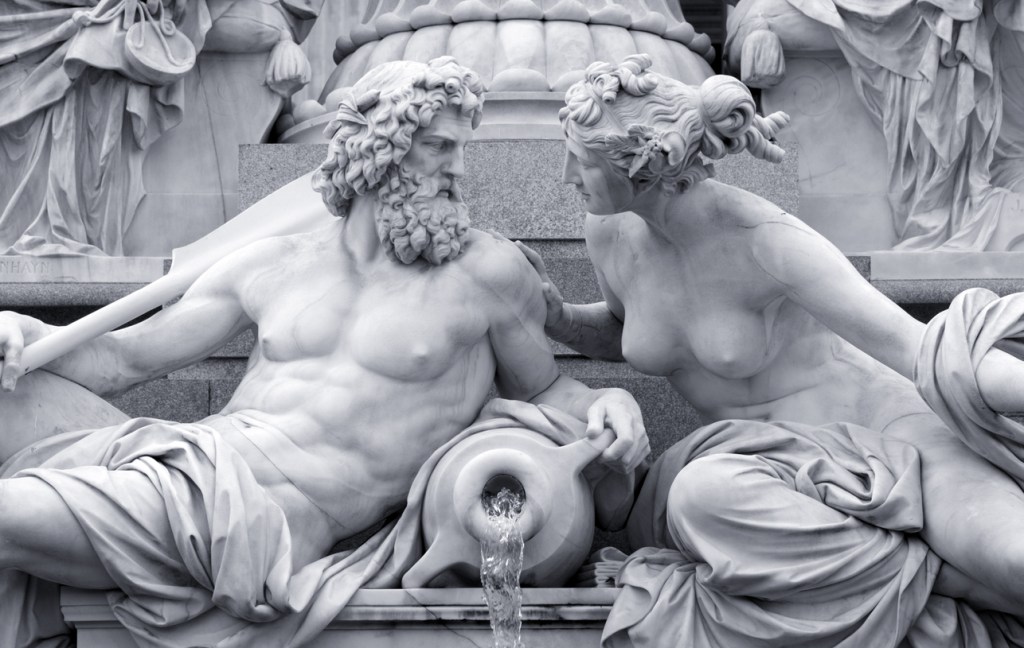
Zeus and Hera
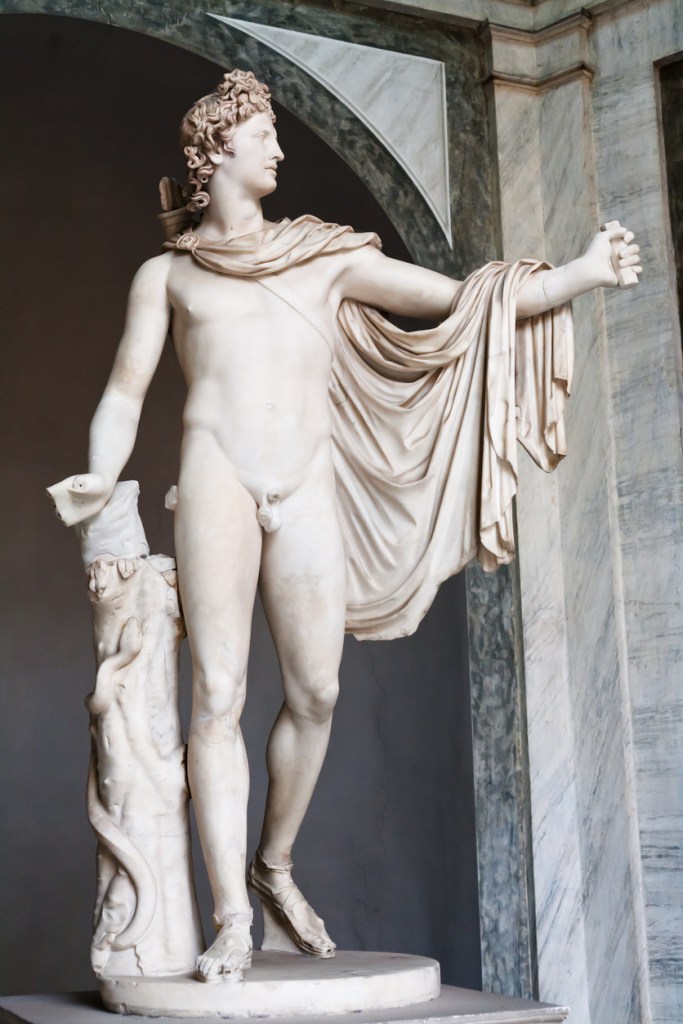
Apollo

Athena
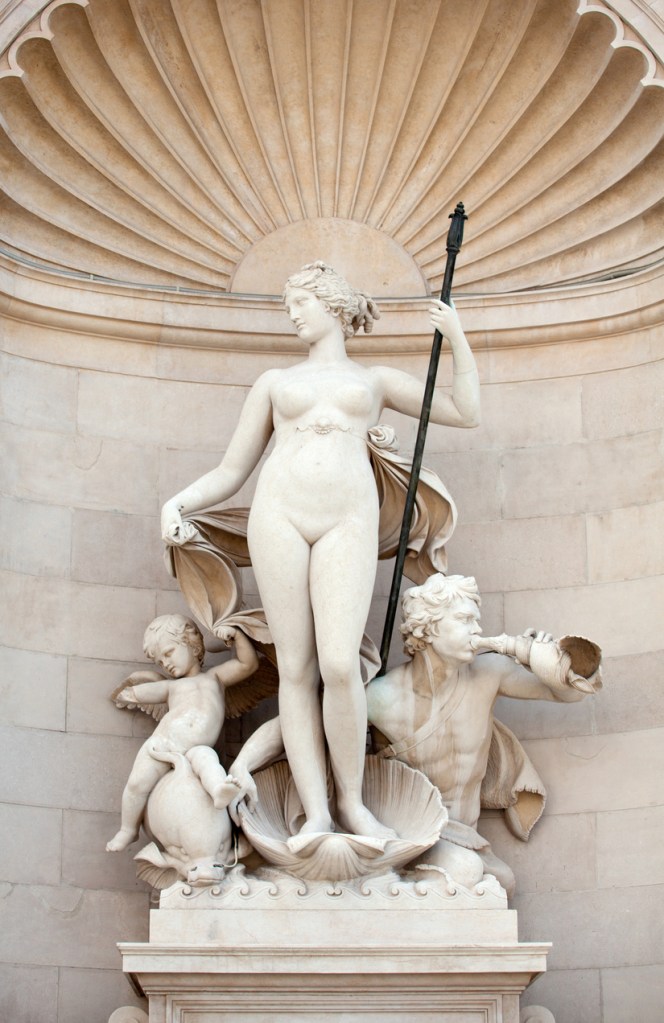
Venus

Mars
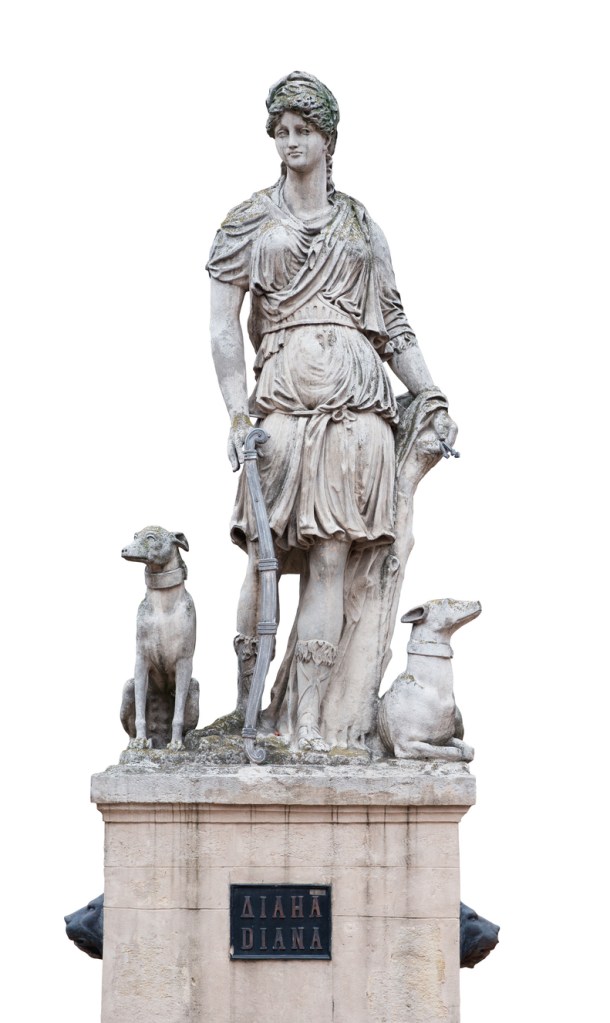
Artemis

Demeter
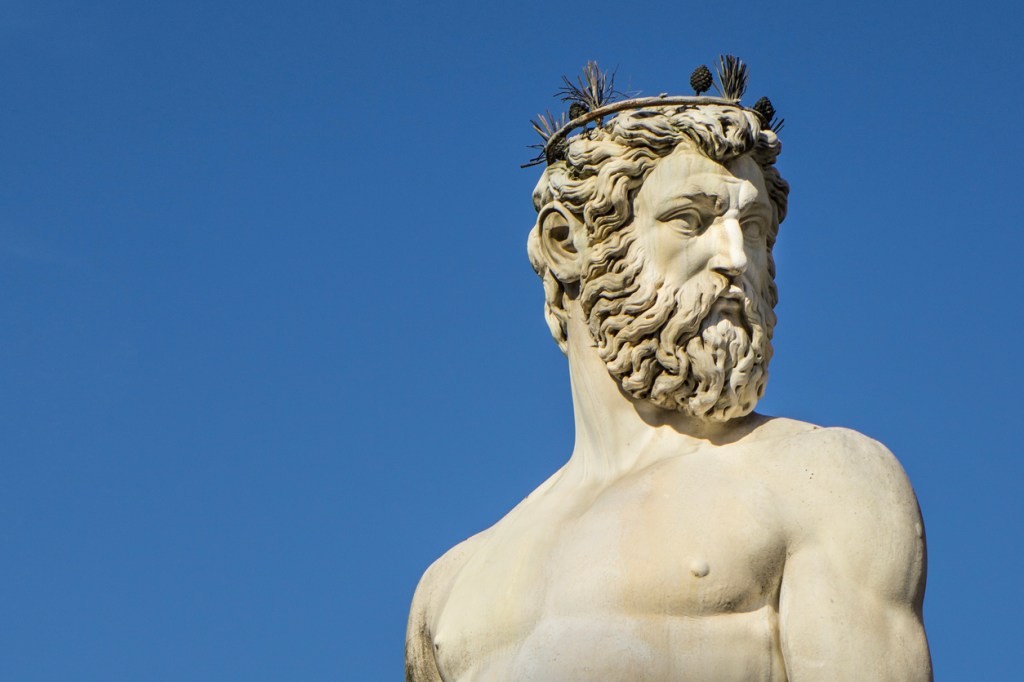
Poseidon
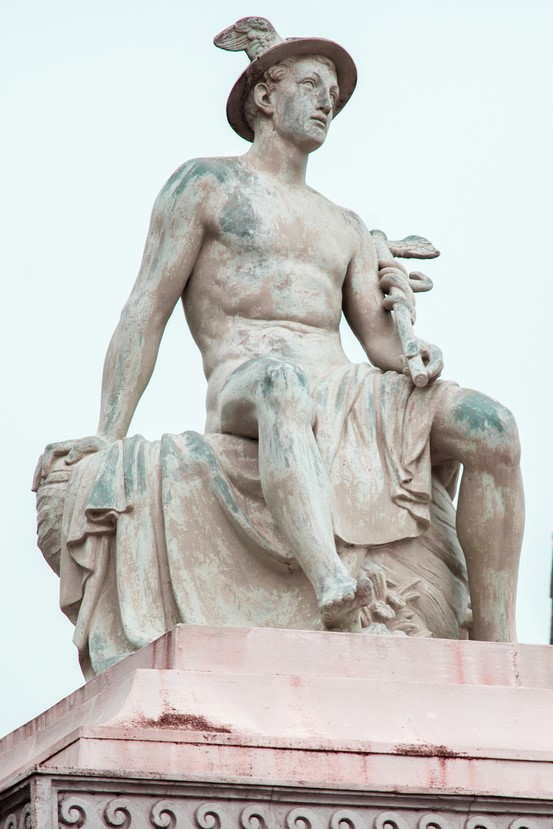
Hermes
 Songs of the Gods